What is an Eligibility Checker?
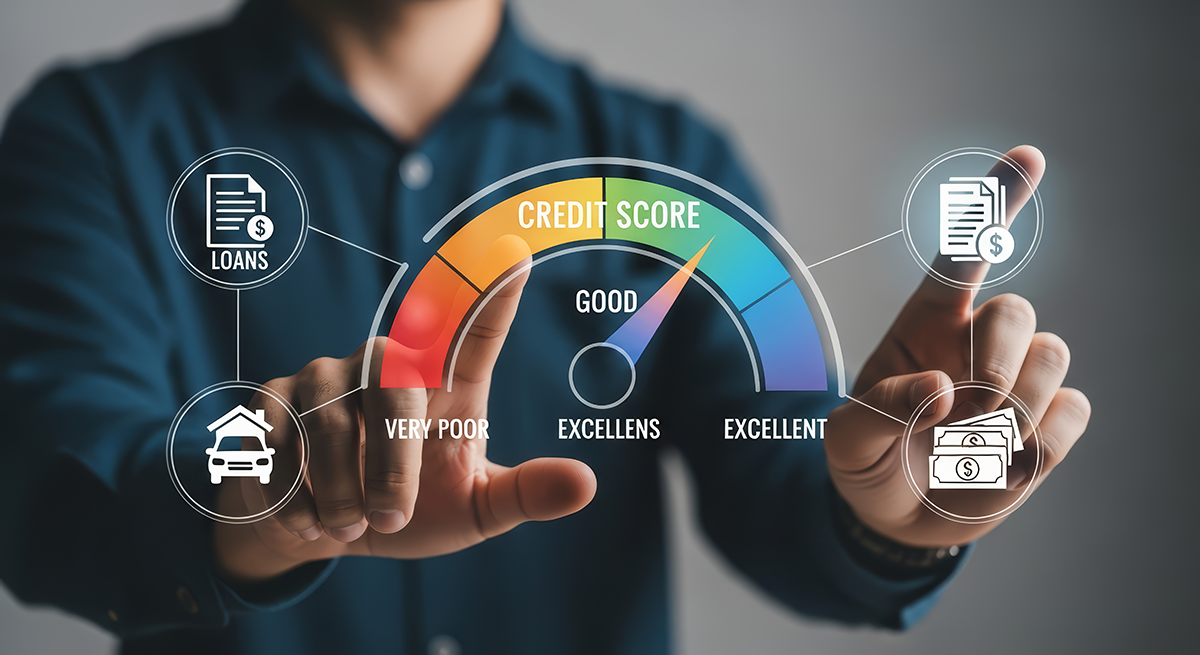
An eligibility checker is an online tool that tells you how likely you are to be approved for a financial product such as a loan, credit card, mortgage or car finance, before you formally apply. It does this using a soft credit search (also called a soft search or soft credit check), which reviews a snapshot of your credit profile without leaving any trace that other lenders can see.
The result is usually shown as a percentage likelihood of approval, a simple Yes/No pre-approval indication, or a ranked list of products you are most likely to qualify for. Crucially, however the result comes back, it has absolutely no impact on your credit score and does not count as a credit application.
Eligibility checkers are now standard across UK financial services. Used by banks, credit brokers, comparison sites and specialist lenders. They exist specifically to solve a real problem: how do you find out whether you'll be approved for something without the act of checking itself damaging your chances?
Every time you formally apply for credit, a hard search is recorded on your file. Multiple hard searches in a short period can signal financial distress to lenders and reduce your chances of approval. An eligibility checker lets you explore your options freely, as many times as you need, without triggering any of this.
Soft Search vs Hard Search - The Essential Difference
Understanding the difference between a soft and hard search is one of the most practically useful things a borrower can know. The two are fundamentally different in what they show, who can see them, and what they do to your credit score.
| Feature | Soft Search | Hard Search |
|---|---|---|
| Triggers | Eligibility checks, background checks, checking your own credit file | Formal applications for loans, credit cards, mortgages, mobile contracts |
| Visible to other lenders? | No - only visible to you | Yes - visible to all lenders checking your file |
| Affects credit score? | No impact whatsoever | Small, temporary reduction |
| How long on file? | 12 months (but invisible to lenders) | 12 months (visible); may remain up to 2 years |
| Limit on how many? | None - unlimited | Should be kept to a minimum |
| Counts as a credit application? | No | Yes |
| Result | Indication of likely approval | Actual lending decision |
The key thing to understand about hard searches is that the concern is not about a single search. One hard search from a single application has a minor and short-lived effect on your score. The problem arises when multiple hard searches accumulate in a short period. If a lender sees six credit applications in three months, it raises a legitimate question about why you needed to apply so many times, and whether each application was declined.
If you apply to five lenders in quick succession without checking eligibility first and are rejected each time, you accumulate five hard searches and five rejections. Each rejection further lowers your score, making the next application less likely to succeed. This is a cycle that eligibility checkers exist specifically to break.
How Does an Eligibility Checker Work?
The process is straightforward and typically takes under two minutes. Here is what happens when you use one:
Name, date of birth, current and previous addresses (typically three years' worth), annual income, employment status, the amount you want to borrow, and the term you are looking for.
The checker securely passes your details to one or more of the UK's three credit reference agencies - Experian, Equifax, or TransUnion, which return a snapshot of your credit profile. This soft search is recorded on your file but is visible only to you.
The checker compares your credit snapshot against the acceptance criteria of one or more lenders. Each lender sets its own criteria for income thresholds, credit history requirements, debt-to-income ratios and so on. The checker identifies where your profile fits.
The result is typically returned within 60 seconds. It may show a percentage likelihood of approval, a pre-approval indication, or a matched list of products. If you choose to proceed with a formal application, the lender will then carry out a hard search as part of its full assessment.
If an eligibility check shows you are pre-approved or highly likely to be accepted, that is a strong indication, but it is not a guarantee. The final lending decision comes only after a full application and hard search, which may uncover additional information. That said, a pre-approval result is a reliable indicator if you have provided accurate information.
What Does an Eligibility Checker Actually Look At?
The soft search used in an eligibility check reviews a range of factors from your credit file and the information you provide. Understanding what it looks at helps you appreciate how accurate the result is likely to be and what you might do to improve it.
From your credit file (soft search)
- Credit history - your track record of repaying credit on time, including any missed payments, defaults or CCJs in the last six years
- Credit utilisation - how much of your available credit you are currently using (lower is generally better)
- Recent credit applications - how many hard searches have appeared on your file recently and whether any were declined
- Existing credit accounts - the types and amounts of credit you currently hold
- Public records - CCJs, IVAs or bankruptcies registered against you
- Electoral roll registration - whether you are registered to vote at your current address, used as an identity and address verification tool
From the information you provide
- Annual income and employment status - permanent employment, self-employment, part-time or benefits
- Monthly outgoings - rent or mortgage payments, existing loan repayments, dependants, etc
- Loan amount requested - how much you want to borrow relative to your income
- Loan term - how long you want to repay over, which affects the monthly repayment amount
- Address history - typically three years needed for a reliable search
The checker then combines all of this to estimate how well your profile matches what the lender is looking for. It is worth noting that different lenders use different criteria, so your result with one lender may differ from your result with another. A credit broker like Gemini, with a panel of multiple specialist lenders, can search across multiple sets of criteria simultaneously using a single soft search.
The FCA, Responsible Lending and Why Eligibility Checks Exist
There is a legal and regulatory dimension to eligibility checking that is worth understanding. Under the FCA's Consumer Credit Sourcebook (CONC 5), all regulated UK lenders are required to conduct a creditworthiness assessment before entering into a credit agreement. This assessment must cover both the lender's credit risk and critically, the borrower's affordability risk.
The FCA is explicit that creditworthiness comprises two elements: the risk that the customer will not repay (credit risk to the lender), and the risk that the credit will negatively impact the customer's wider financial situation (affordability risk to the borrower). A loan might be profitable for the lender but unaffordable for the borrower and CONC rules require lenders to assess both.
Eligibility checkers support this framework. They allow lenders to make a preliminary assessment of suitability before a hard search is carried out, protecting both the lender from making unsuitable loans and the borrower from accumulating hard searches on applications that were always unlikely to succeed.
Under CONC rules, a lender must assess whether you can make repayments in a sustainable manner, without incurring financial difficulties or experiencing significant adverse consequences. This means lenders look at your income, outgoings, existing debts, and whether the proposed repayment is genuinely manageable, not just whether you are likely to repay at all.
When Should You Use an Eligibility Checker?
The short answer is: always use one before making a formal credit application, particularly if:
- You have a less-than-perfect credit history and are unsure whether you will be accepted
- You want to compare multiple products without affecting your score
- You have been declined for credit recently and want to understand your current options
- You are approaching an important financial milestone, such as a mortgage application and cannot afford hard searches on your file
- You are looking for a short-term loan with bad credit and want to know which lenders are realistically likely to help
The only situation where an eligibility check is not necessary is if you are completely confident you will be approved, for example, if you are applying for a product with your existing bank where you have a long, positive relationship and pre-approved terms have been offered.
What Happens After the Eligibility Check?
If your eligibility check returns a positive result and you decide to proceed, the lender will carry out a full application process. This will include:
- A hard credit search - recorded on your file and visible to other lenders for 12 months
- Full identity and fraud verification
- Income verification (some lenders use Open Banking, which securely connects to your bank account data in real time)
- A full affordability assessment, considering your income, outgoings and existing debt commitments
This full process is what the FCA requires under CONC 5 before any regulated credit is advanced. The eligibility check is a pre-screening step, not a substitute for it.
If your formal application is approved, the hard search on your file will reflect the application. If you are declined after the hard search, the search still appears on your file, which is why using an eligibility checker first to filter likely-to-succeed applications matters so much.
How Much Does a Hard Search Actually Affect Your Credit Score?
This is a question worth answering precisely, because it is often misunderstood in both directions. Some people ignore hard searches entirely, others are more worried than they need to be.
The realistic picture:
One application for credit typically causes a small, temporary dip in your score, often just a few points. The impact begins to fade within months and is negligible by the time the search drops off after 12 months. A single hard search is unlikely to affect any subsequent credit decisions in a meaningful way.
Three or more hard searches within a short window is where lenders start to take notice. It can suggest financial instability or a pattern of rejected applications. The general guidance is to space applications at least three months apart where possible — and to use eligibility checkers to avoid unnecessary applications altogether.
Use eligibility checkers to narrow your options to the one or two products most likely to be approved. Then apply formally just once, with confidence. This minimises hard searches while maximising your chance of success on the application you do make.
Common Misconceptions About Eligibility Checkers
There are a few persistent myths around soft searches and eligibility checkers that are worth addressing directly:
"The eligibility check said I'd be accepted, so why was I declined?"
An eligibility check is an estimate, not a guarantee. The soft search sees a snapshot of your credit profile, but the full hard search during a formal application reveals more detail. A lender may find something during the hard search, a very recent default, an undisclosed debt or an income discrepancy that was not visible in the soft search data. Pre-approval means high likelihood, not certainty.
"Checking my eligibility will hurt my credit score"
This is incorrect. A soft search has zero impact on your credit score. You can run eligibility checks daily if you wish, there is no limit and no consequence. Only formal credit applications (hard searches) affect your score.
"If the eligibility checker says no, my credit is ruined"
Also incorrect. A soft search cannot damage your credit in any way. If an eligibility check returns a low likelihood of approval, it simply tells you that a formal application with that lender is unlikely to succeed. It has not counted as a rejection and has left no mark. You can try a different lender's eligibility checker immediately without any consequence.
"All eligibility checkers are the same"
They are not. A single-lender eligibility checker only assesses your suitability for that lender's products. A credit broker with a lender panel like Gemini, searches across multiple lenders simultaneously, using your single soft search to find which lenders on the panel are most likely to approve you. This is significantly more efficient than running individual checks with multiple lenders.
Gemini's Eligibility Check - How It Works
When you apply through Gemini, your initial eligibility check uses a soft credit search. This is completely invisible to other lenders, has no impact on your credit score, and leaves no trace on your file that could affect any other applications you make.
Gemini's soft search matches your profile against our panel of specialist lenders, all of whom are FCA-authorised and required to conduct responsible lending checks under CONC 5. The result tells you which lenders on our panel are likely to be able to help, and at what indicative rate.
If you choose to proceed with a formal application to a specific lender, you will be clearly informed before any hard search takes place. You are under no obligation to proceed, and no hard search occurs unless you explicitly continue to a full application. This transparency is a requirement of FCA regulation and a core part of how Gemini operates.
| Amount borrowed | £1,000 |
| Term | 18 months |
| Monthly repayment | £89.22 |
| Total repayable | £1,605.96 |
| Annual interest rate (fixed) | 59.97% |
| Representative APR (variable) | 79.5% |
Min APR 48.1% · Max APR 1,721% · Min term 1 month · Max term 36 months. Your personal rate is confirmed in your offer before you agree to anything.
Frequently Asked Questions
An eligibility checker is a free online tool that tells you how likely you are to be approved for a loan or credit card before you apply. It runs a soft credit search, which has no impact on your credit score and is invisible to other lenders and uses that snapshot alongside the information you provide to match your profile against a lender's criteria. Most eligibility checks take under two minutes and return a result instantly.
No, not at all. An eligibility check uses a soft credit search, which has zero impact on your credit score and is not visible to other lenders. Only you can see it on your own credit file. Hard searches are triggered only when you formally apply for credit and are the ones that can temporarily affect your score. You can run eligibility checks as many times as you need without any consequence whatsoever.
A soft search is a preliminary review of your credit profile used for eligibility checks. It is recorded on your file but invisible to other lenders and has no impact on your score. A hard search is a full review of your credit file carried out when you formally apply for credit. It is recorded and visible to all lenders checking your file for 12 months, and can cause a small, temporary dip in your score, especially if multiple hard searches accumulate in a short period.
A hard search is typically visible on your credit file for 12 months, though it may remain for up to two years depending on the credit reference agency. Its impact on your credit score usually diminishes well before the 12-month mark, particularly if you continue to manage your finances well. The key is to avoid accumulating several hard searches in a short space of time, which is exactly what eligibility checkers help you to avoid.
Technically no. Because an eligibility check is not a formal credit application, you cannot fail it in any meaningful sense. The result is an indication of likely approval, not a decision. A low result simply means a formal application to that lender is unlikely to succeed. Importantly, a negative result from an eligibility check has no effect on your credit file whatsoever. You are free to try other lenders' eligibility checkers immediately.
There is no limit. Because soft searches do not affect your credit score and are not visible to other lenders, you can run eligibility checks as often as you like, with as many providers as you wish, with no negative consequence. This is one of the main benefits of the system: it lets you shop around freely before committing to a formal application.
Pre-approval is a strong indicator but not a guarantee. It means a lender has assessed your profile against its criteria using a soft search and believes you are likely to be approved. However, the final decision comes only after a full application and hard search, which provides the lender with more detailed information. Pre-approval reflects a good likelihood, not a certainty. Most pre-approvals do convert to full approvals when the information provided was accurate and nothing significant has changed.
No. Gemini's initial eligibility check uses a soft credit search only. It is completely invisible to other lenders, has no impact on your credit score, and leaves no trace on your credit file. If you choose to proceed to a full formal application with a specific lender, you will be clearly informed before any hard search is carried out. You are never obligated to continue, and no hard search happens without your explicit consent to proceed.
About The Author

Mark founded Swift Money Limited in Bolton in 2011, predating FCA regulation of the short-term lending sector. With over 15 years of experience in UK consumer finance, he oversees all content published on gemini.co.uk, ensuring accuracy and compliance with current FCA guidance.
All guides on gemini.co.uk are written to provide accurate, plain-English information for UK consumers. Content is reviewed by the Gemini Compliance Team against current FCA guidance before publication. Gemini is authorised and regulated by the Financial Conduct Authority (Ref. 738569). This guide is for informational purposes only and does not constitute financial advice.